
 English
 Deutsch
 Español
SAFE Bet Act Proposes Federal Regulations for US Sports Betting
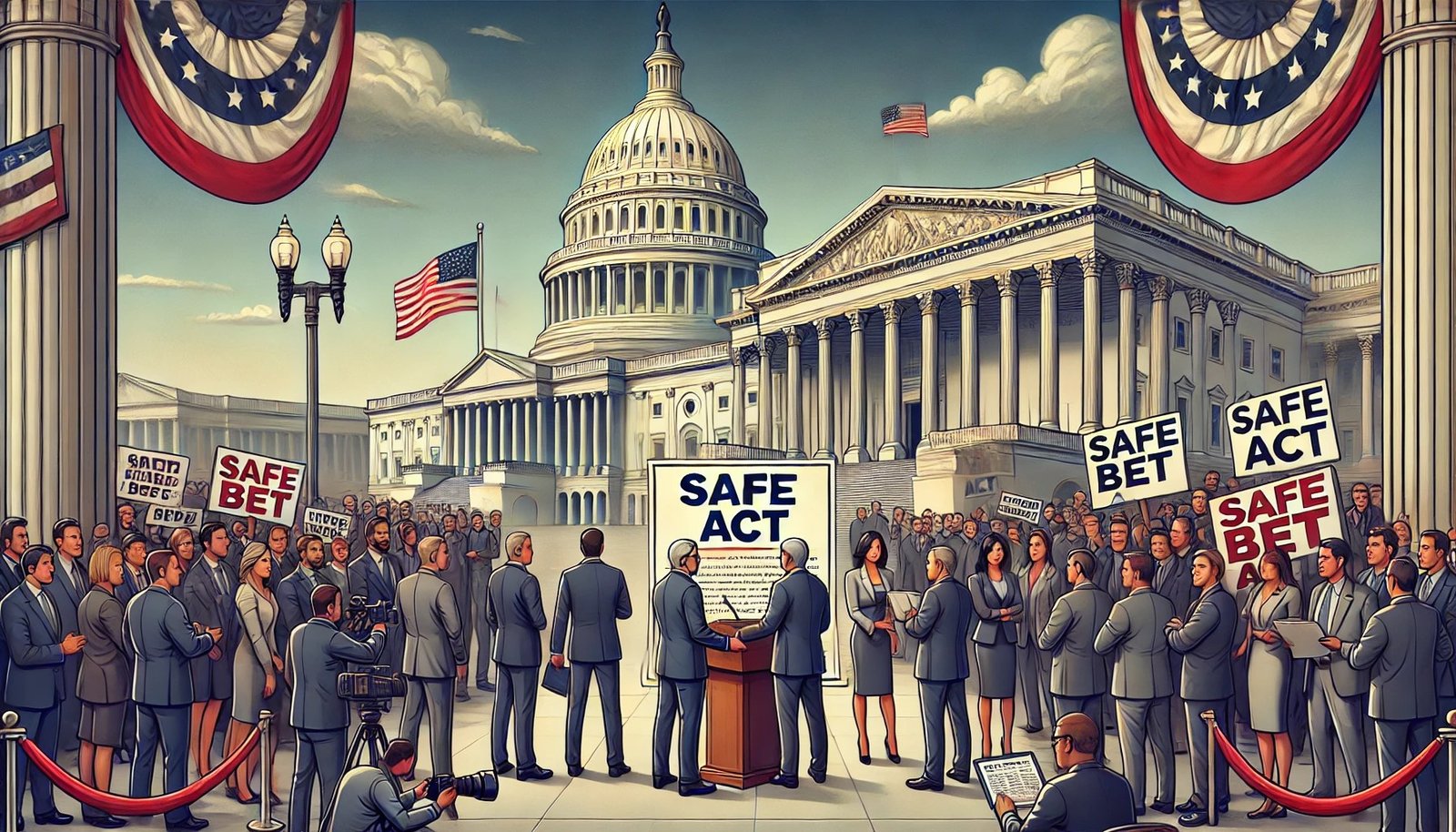
The Supporting Affordability and Fairness with Every Bet Act, known as the SAFE Bet Act, was officially introduced outside the Capitol in Washington, DC, earlier this week.
Earlier this year, U.S. Representative Paul Tonko announced his intention to introduce the SAFE Bet Act, which proposes federal regulations on sports betting to protect consumers from excessive gambling harm. On Thursday, Tonko, joined by Senator Richard Blumenthal and other supporters, formally introduced the act.
This announcement comes as sports betting is accessible to millions of Americans in 38 states and Washington, DC. Speaking outside the Capitol, Tonko emphasized the bill’s importance, highlighting the dangers of excessive betting and the pervasive wagering advertisements that reach Americans through travel, internet browsing, and watching sports.
“Today, I introduced the SAFE Bet Act that creates nationwide consumer protections for the mobile sports gambling industry. This industry has hijacked Americans’ love of sports by recklessly peddling a known addictive product. Our bill puts an end to those dangerous practices,” said Rep. Paul Tonko.
The Risks of the Gambling-Sports Connection
Tonko discussed the rapid growth of the legal betting sector over the past six years, noting its impact on millions of Americans. He criticized how every moment of sporting events has become a betting opportunity. Tonko further condemned the widespread advertising of betting on billboards, TV, radio, and social media, stating that this relationship between sports and gambling is “intolerably dangerous.” He urged Congress to act, stating that the SAFE Bet Act is timely and necessary.
Senator Blumenthal also voiced concerns, calling for a “national standard” to protect Americans from excessive wagering. He clarified that the proposal does not seek to ban gambling entirely but rather to regain control over an industry that has become “out of bounds.” Blumenthal added that the SAFE Bet Act aims to prevent addiction, protect young people, and save lives.
Opposition from the American Gaming Association (AGA)
The proposal has faced criticism from some quarters. Chris Cylke, Senior Vice President of Government Relations for the American Gaming Association (AGA), issued a statement opposing the new bill. He pointed to the billions in tax revenue generated by regulated betting and emphasized that the legal sector protects consumers from offshore operators and dangerous local bookmakers.
Cylke further argued that the legal betting sector is the result of a collaborative effort among operators, regulators, and stakeholders committed to responsible gaming. He criticized the federal proposal as a “slap in the face” to state legislatures and gaming regulators who have spent significant time and resources developing thoughtful frameworks for their jurisdictions.
Key Provisions of the SAFE Bet Act
The SAFE Bet Act proposes several significant changes to the betting industry. One of the primary measures is implementing a ban on sportsbook advertising during live sports events and primetime hours. It also calls for restrictions on promotional wording, such as bonuses and boosts, in betting ads.
The bill aims to prohibit bookmakers from using AI to track consumers’ habits for personalized promotions. Additionally, it seeks to limit the use of AI in developing betting products, including microbets.
Further changes include direct impacts on bettors, such as the introduction of affordability checks for large wagers and banning the use of credit cards for deposits. The act also proposes a limit of five deposits per customer within a 24-hour period.
Overall, the SAFE Bet Act aims to establish federal regulations designed to protect public health in the sports betting sector.

